
Check in
Players review required documents, attend the organization’s briefing process, receive identification, and activate for the game.
The game
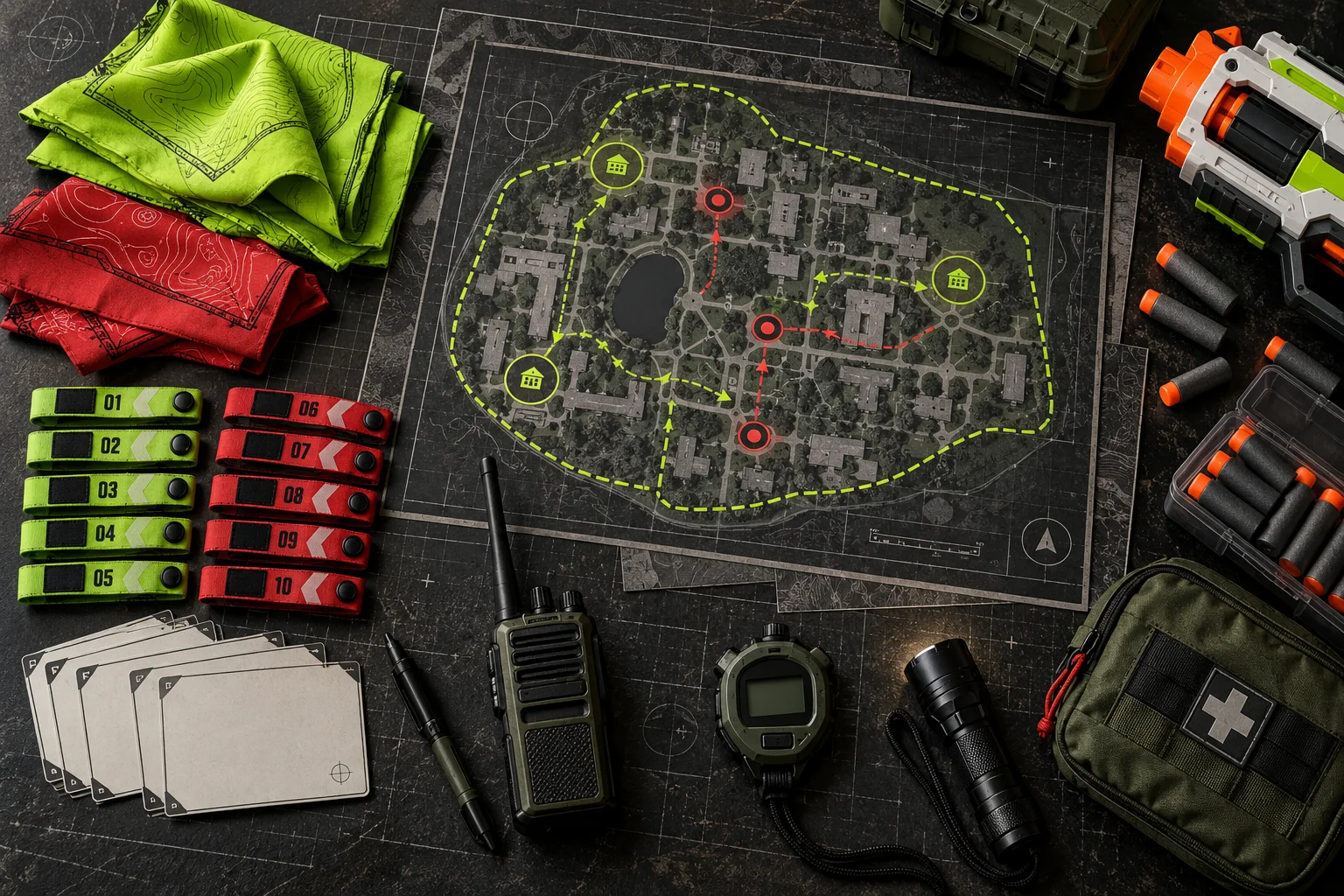
Players begin as humans or zombies. Zombies convert humans through verified tags, while humans coordinate routes, complete objectives, and use approved foam equipment to create space. Organizers shape the schedule, boundaries, story, and local rules.
The basic loop
Players review required documents, attend the organization’s briefing process, receive identification, and activate for the game.
Humans move carefully and use legal stuns; zombies coordinate tags and return after the organization’s cooldown rules.
Scheduled activities create shared moments and give teams a reason to gather, move, solve, defend, or escort.
A defined end time and final activity give the game a clean conclusion, followed by results and a staff review.
Why it works
HVZ gives players an immediate reason to communicate: choose a route, watch an entrance, share an update, or join an objective. Participation can scale from a few minutes between classes to coordinated team play across the week.
The central premise is recognizable even when the organization adds its own story and mechanics.
Wristbands, faction markers, and public objectives make the event legible to players and staff.
Movement, planning, puzzles, communication, and support roles can all matter.
A defined game window creates momentum without asking students to make a permanent commitment.
Safety and clarity
Players should always know where play is allowed, what equipment is approved, how they are identified, how to pause participation, and how to reach staff.
A local game
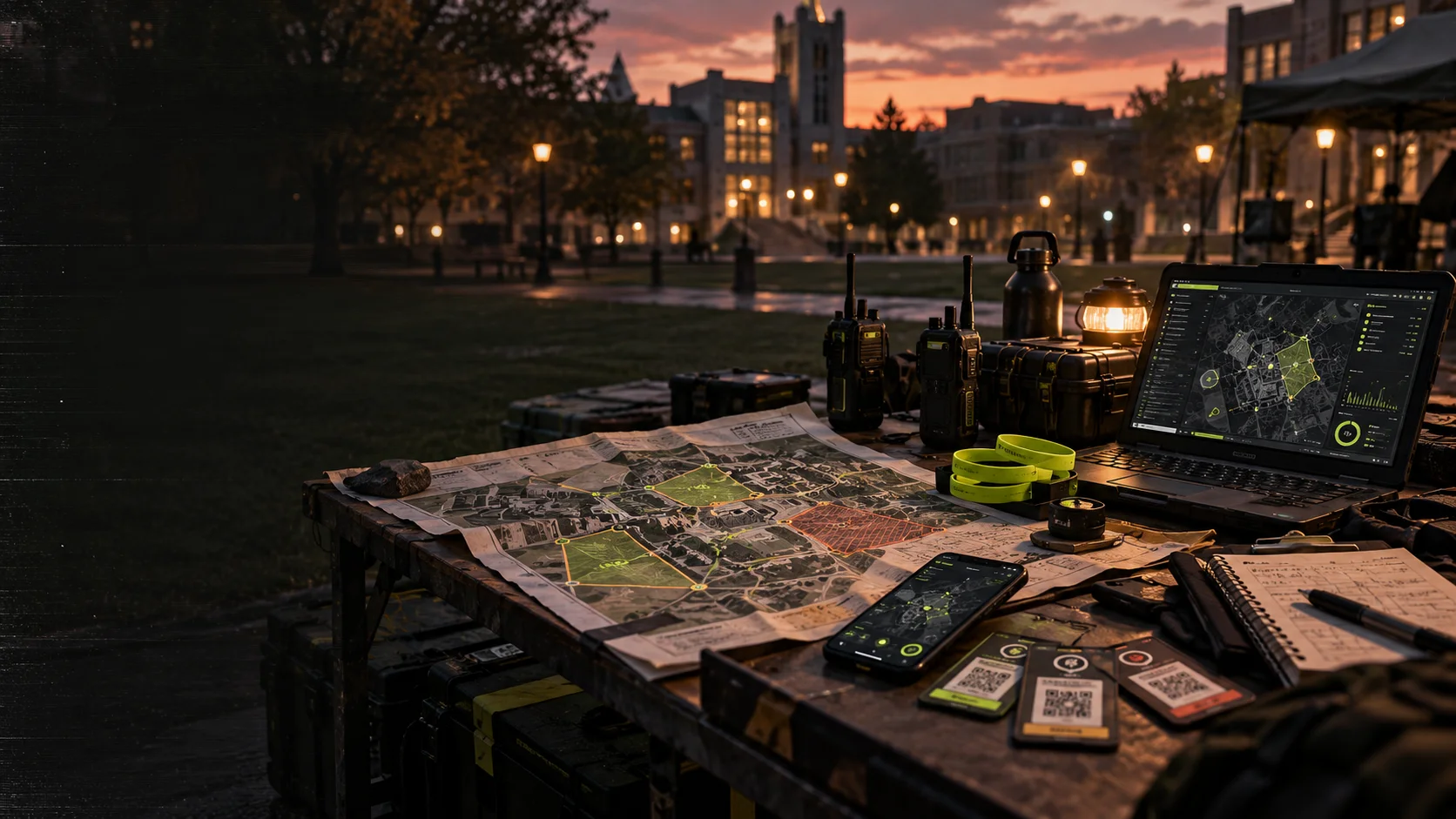
Useful landmarks, realistic travel time, local policies, staff capacity, and student schedules should shape the game. The platform supplies a connected operating layer; the organization supplies judgment and campus context.
Review the organizer modelNext